Milton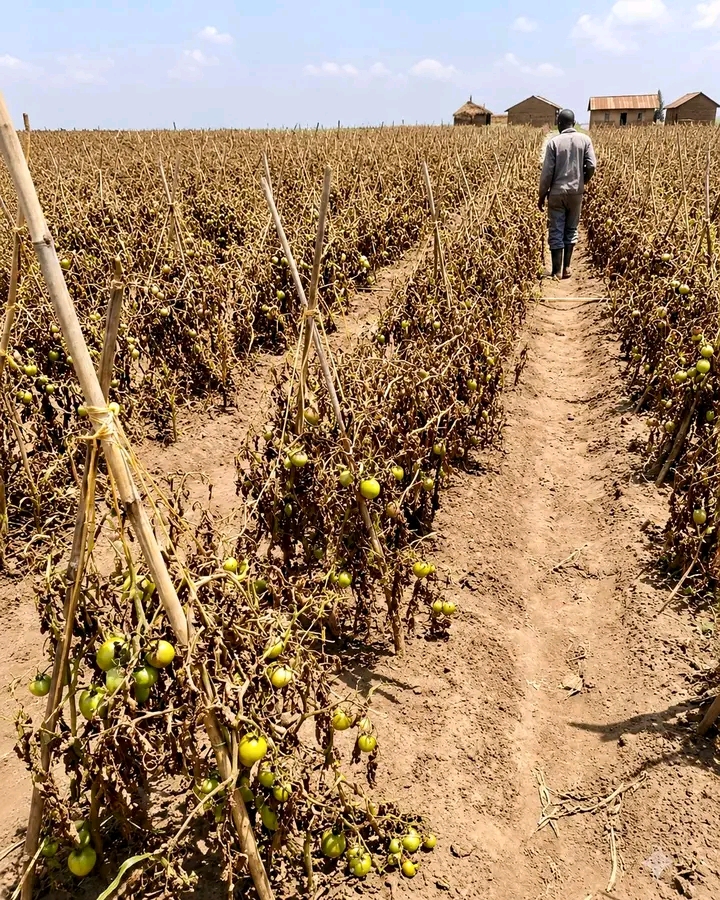
I can confirm to you, this field was perfect.
Perfect staking.
Raised beds.
Neat row layout and clean footpaths.
Every agronomic practice was done to the book.
This was a tomato project we were entrusted with from kupanda to harvesting.
Then nature reminded us who is in control.
Our small source of water, a small stream we depended on, dried up completely. With thirsty plants in the field, we had to make the hardest decision.
We stopped spraying.
We stopped fertilizer application.
We stopped pest and disease control.
You cannot feed a thirsty plant. It won’t absorb. You will just burn it and waste more money.
We walked through these rows with our client and advised them to abandon the project. A total loss. It hurts to write this, but this is farming reality.
THE LESSON WE ARE TEACHING:
- In farming, water is 100%. You can have the best seeds and chemicals, but without guaranteed water, you have nothing.
- Do a water audit BEFORE you prepare land. Don’t ask, “Is there water?” Ask, “Will there be water in the next 4 months? How many litres per day will my tomatoes need at peak? What is my backup?”
- A small stream is not a reliable source. If you cannot store at least 2-3 months of water in a dam liner or have a borehole, think twice before planting a large acreage of a thirsty crop like tomato.
- Know when to stop. Continuing to spray a wilting crop is throwing good money after bad money. Sometimes the most professional advice is to let go and prepare for the next season.
We did everything well, but we never planned for water. We have learned.
#FarmingTruth #CentosAgriVentures