Milton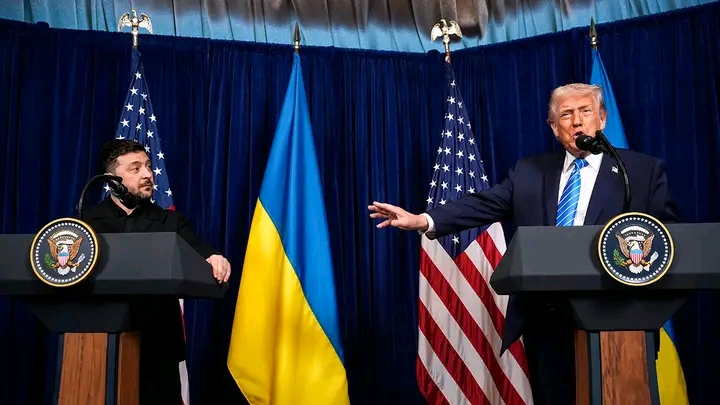
Ukraine and its Western partners have agreed on a security guarantee plan that would trigger the rapid deployment of European forces to Ukraine in the event that Russia violates a future ceasefire agreement, according to a report by the Financial Times.
Sources familiar with the discussions said the plan, which outlines phased responses to potential Russian ceasefire violations, was negotiated during a series of meetings involving Ukrainian, European, and U.S. officials from December last year through January. Under the framework, an initial response would begin within 24 hours of any confirmed breach.
The first phase would involve diplomatic warnings, followed by Ukrainian military operations aimed at halting further violations. If hostilities persist, a so-called “coalition of the willing” — a group of countries supporting Ukraine — would mobilize military forces to intervene during a second phase.
Troops from multiple European Union member states, as well as the United Kingdom, Norway, Iceland, and Turkey, would be deployed under the plan. Should violations escalate into a large-scale attack, Western coalition forces, including U.S. troops, would reportedly respond within 72 hours of the initial breach.
On the security front, leaders of the coalition of the willing met in Paris on 6 January, where they announced plans to deploy a European-led international force to Ukraine. European officials said the mission would provide air, maritime, and ground security measures, supported by U.S. logistics and intelligence capabilities. Washington has reportedly committed to supplying advanced monitoring systems to oversee Ukraine’s 1,400-kilometer frontline.
Security guarantees are viewed as critical for Kyiv as it enters ceasefire negotiations, given Ukraine’s history of repeated ceasefire violations by Russia since 2014. Following Russia’s initial incursions into eastern Ukraine’s Donetsk and Luhansk regions, the Minsk agreements of 2014 and 2015 sought to halt the fighting but ultimately collapsed due to the absence of enforceable security guarantees. Russia launched its full-scale invasion of Ukraine in 2022.
Ukrainian President Volodymyr Zelensky said in January that the security guarantees discussed with the United States and European allies are “100 percent ready” and awaiting formal signing.
Russia has rejected Western-backed security guarantees as unilateral measures, insisting it cannot accept a ceasefire or the deployment of Western forces without a comprehensive agreement addressing its concerns.
The United States, Russia, and Ukraine held trilateral talks in Abu Dhabi, United Arab Emirates, on 23 and 24 March to discuss a potential settlement to end the war, with further negotiations scheduled for 4 and 5 March. While expectations for progress have risen following the launch of trilateral talks, concerns remain that negotiations may stall due to persistent disagreements over territorial issues and Ukraine’s long-term security arrangements.