Milton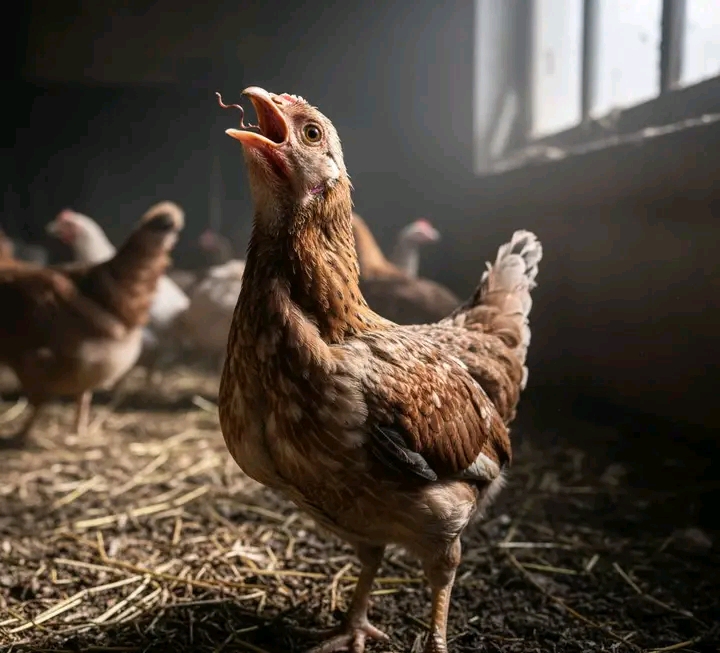
Gaping is a clinical sign in birds where the bird stretches its neck, throws the head backward, and opens the beak repeatedly in an attempt to inhale air (oxygen). It is a clear indication of breathing difficulty and should never be ignored.
CAUSES
Overcrowding, poor ventilation, and ammonia gas buildup
Poor air quality in poultry houses, especially due to overcrowding, inadequate ventilation, and accumulated wet litter, leads to ammonia gas buildup. This irritates the respiratory tract and causes birds to gasp for air.
Corrective actions include reducing stocking density, improving airflow, and replacing wet or dirty litter regularly. If these measures are corrected and the bird continues to gape, another cause should be suspected.
Gapeworm (Syngamus trachea) infection
Syngamus trachea is a parasitic worm that lodges in the trachea (windpipe) of birds, partially or completely blocking airflow. This obstruction causes severe breathing difficulty, leading to the characteristic gaping sign.
The parasite affects birds of all ages but is more common in free-range and deep-litter systems. Infection occurs mainly through ingestion of infected paratenic hosts such as earthworms, beetles, flies, or other insects that carry the larvae.
If birds have already been treated with antibiotics such as tylosin for 3–5 consecutive days, ventilation has been improved, overcrowding has been corrected, litter is well managed, and yet birds continue gasping for air, Syngamus trachea should be strongly suspected.
SOLUTION
Treat affected birds with an effective anthelmintic. Common options include piperazine or oral ivermectin, administered for 2–3 days according to the correct dosage. In addition to treatment, improve hygiene, limit access to intermediate hosts, and maintain good housing conditions to prevent reinfection.